
Homes near the coast can expose exterior hardware to moisture, airborne salt, sun, and wind-driven residue. The result may appear first as dulling or spotting, but changing latch movement, rough key operation, loose fasteners, or active rust deserve closer attention. The safest routine is to observe, clean according to the manufacturer, and avoid forcing a lock or latch that is no longer working normally.
Identify the product before choosing a cleaner
Door hardware can use solid metal, plated finishes, coated stainless steel, lacquer, paint, or living finishes designed to change over time. A product that is harmless on one finish can scratch, cloud, strip, or discolor another. Look for a manufacturer name on the latch edge, key, hinge, or original paperwork, then follow that product’s care instructions. When the product cannot be identified, begin with the least aggressive approach and test an inconspicuous area.
Inspect operation as well as appearance
- Turn the key, thumb turn, lever, and deadbolt without applying extra force.
- Watch whether the latch retracts and returns on its own.
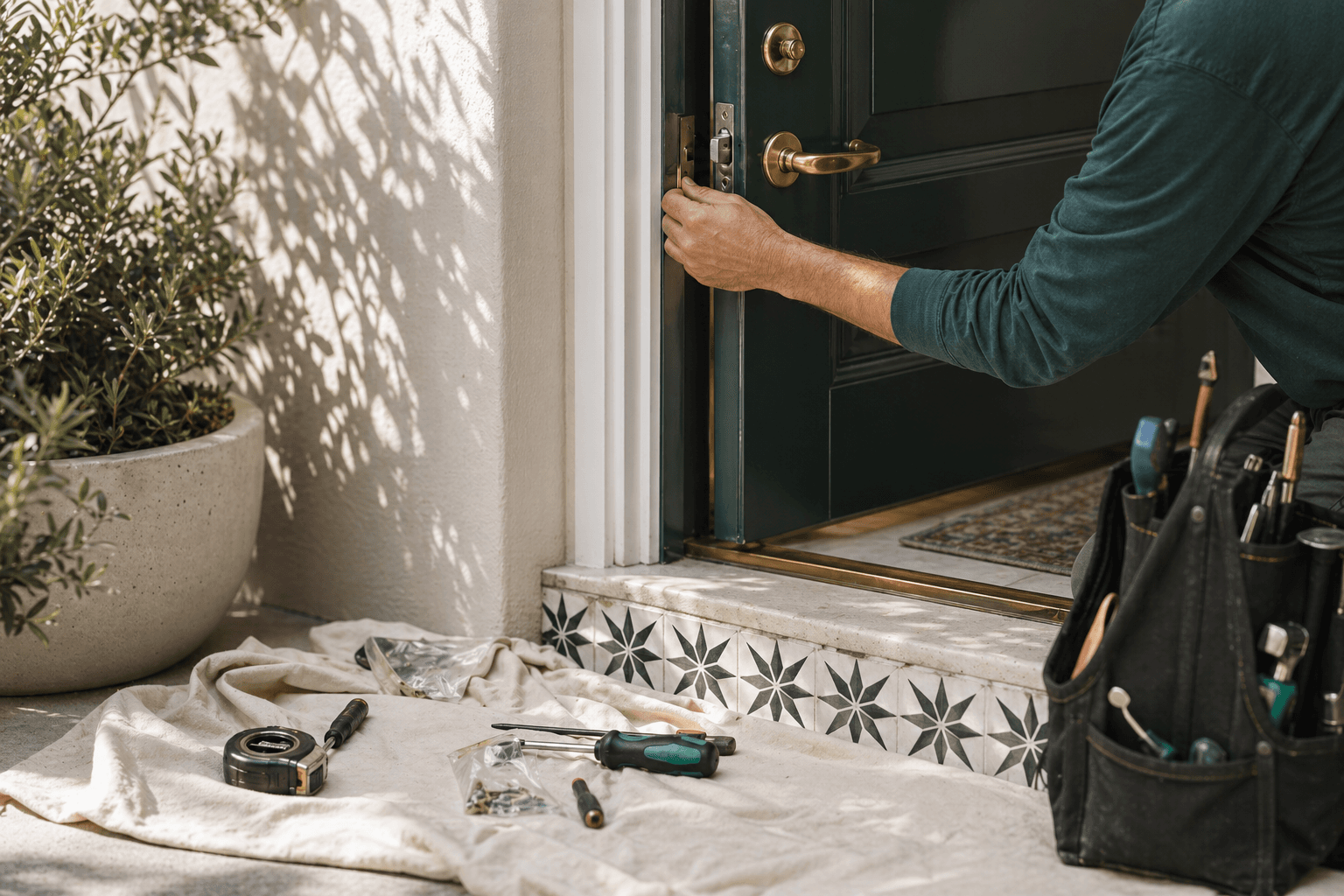
- Check hinges, strike plates, escutcheons, and exposed fasteners for movement.
- Look for rust trails, pitting, flaking, swelling, or residue at joints and screw heads.
- Close the door slowly and note whether alignment changes near the latch or threshold.
- Photograph finish changes in even daylight so future progression is easier to compare.
Clean gently and more often in marine conditions
ASSA ABLOY’s product-care guidance recommends routine inspection and cleaning, with shorter intervals in marine or corrosive environments. Its general process uses a dilute mild liquid detergent in warm water to remove dirt, grime, and airborne salt, while the exact manufacturer instructions should control for your product. Avoid abrasive pads, steel wool, harsh solvents, and unapproved lubricants that can damage a finish or attract debris inside a mechanism.
Know when cleaning is no longer the answer
Cleaning addresses surface deposits; it does not repair a weakened fastener, failed spring, worn latch, misaligned strike, corroded internal part, or deteriorated door edge. Request review when a lock does not secure reliably, the door must be lifted or pushed to latch, a fastener no longer tightens, metal is flaking or deeply pitted, or a mechanism binds after gentle cleaning. Do not spray a random product into a lock or force the key while waiting.
Send the details that help with parts research
- One photo of the entire exterior and interior side of the door
- Close photos of the handle, latch edge, strike plate, hinges, and visible damage
- A short video showing the door closing and the lock operating
- Manufacturer markings, keyway name, finish color, and approximate dimensions
- Whether the issue changes with weather, time of day, or pressure on the door
This information helps separate a finish-care question from alignment, hardware replacement, frame movement, or a security concern. Review the door, window, and screen service for common request examples. Paloma Pro can identify when custom, historic, glass, access-control, or structural work needs a specialist.