

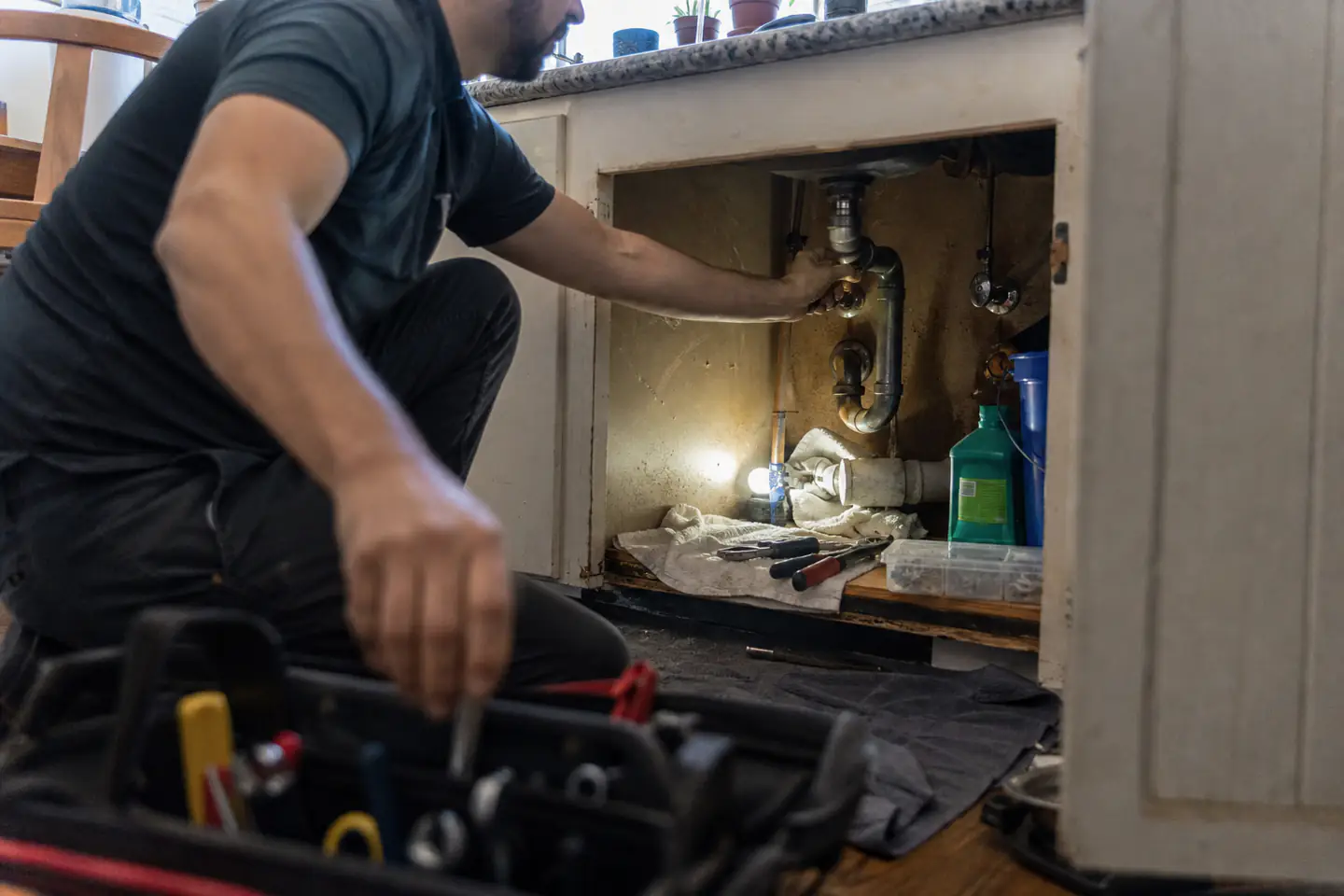
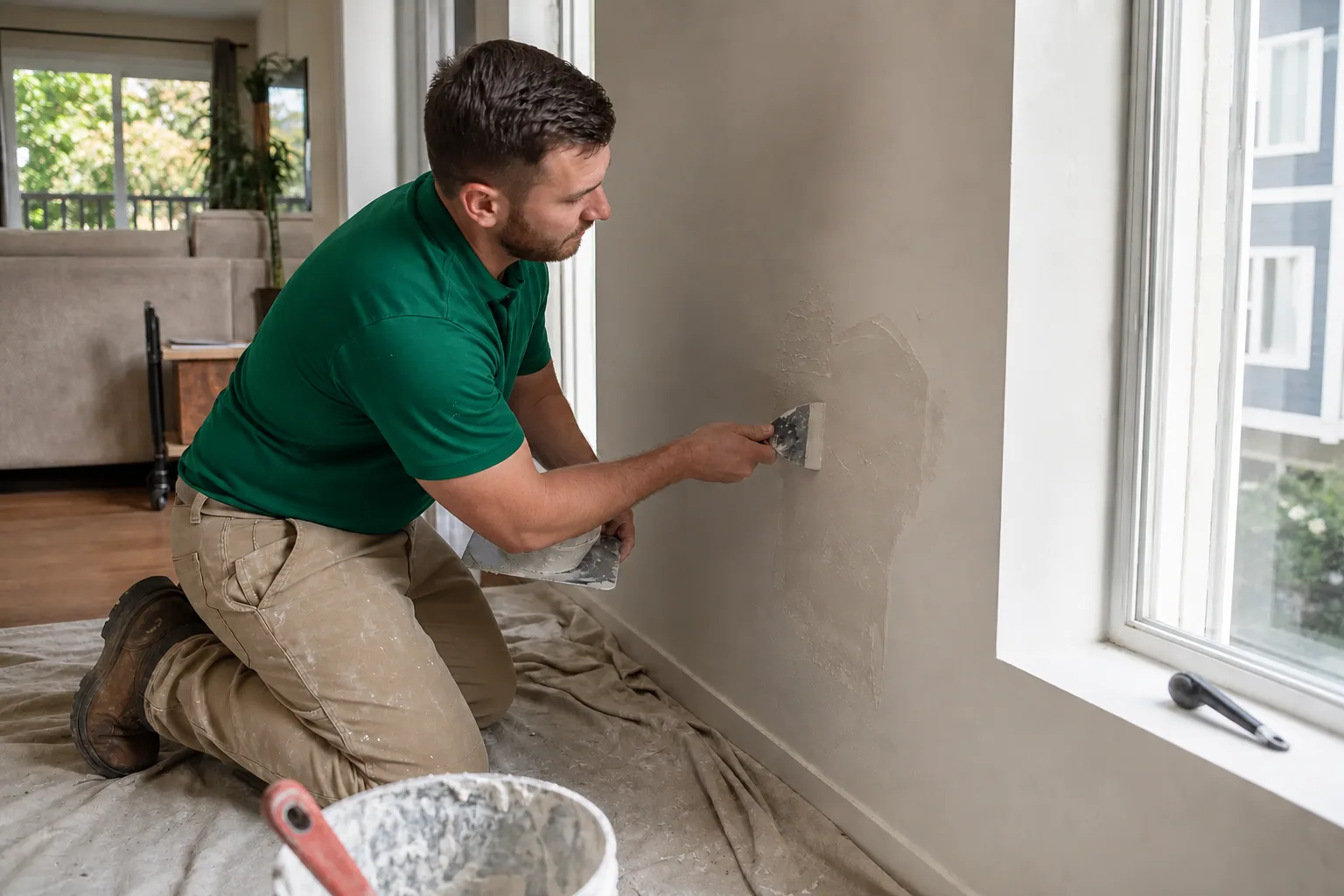
Before patching drywall, determine whether the area is dry, stable, and only cosmetically damaged. A nail hole or small impact dent can be a finishing problem. Recurring staining, softness, swelling, odor, or mold-like growth can point to an unresolved moisture problem. Covering the symptom before the source is corrected can hide a condition that still needs attention.
Photograph the context before touching the wall
- One photo of the entire wall from across the room
- One close photo with a ruler or tape measure for scale
- Side lighting that shows bulges, depressions, texture, or lifted paper
- Nearby plumbing fixtures, windows, rooflines, vents, or exterior walls
- Any staining pattern above, below, or beside the obvious damaged area
- Previous patches, paint changes, or access openings in the same location
Describe what changed and when
Record when the damage appeared, whether it followed a leak, impact, installation, move-out, or repair, and whether it is changing. Note smell, temperature, softness, moisture, and whether the condition returns after rain or fixture use. Do not press repeatedly on a soft wall or cut it open just to improve the photo.
Resolve moisture before cosmetic repair
The U.S. Environmental Protection Agency’s mold and moisture guide identifies moisture control as the key to mold control. If water is active or the source is unknown, stop and address that problem first. The repair path may involve drying, removal, cleaning, testing, or specialized remediation depending on the extent and circumstances. Paloma Pro should not promise a cosmetic patch until the area is appropriate for repair.
Set a realistic finish expectation
Drywall repair can include several different finish levels: closing an opening, making it paint-ready, matching an existing texture, priming, or blending finish paint. Existing texture, wall age, sheen, lighting, and prior repairs affect how invisible a patch can become. State whether the priority is function, paint-ready preparation, or the most consistent finished appearance.
Do not diagnose damage from color alone
A brown mark is not proof that a surface is dry, and a clean-looking wall is not proof that moisture is absent. Photos help describe the pattern but cannot establish the cause or condition behind the finish. If the area changed recently, feels soft, smells unusual, or sits near an unresolved leak, document those facts and pause cosmetic work until the underlying concern has been evaluated.
Flag older painted surfaces
Sanding, cutting, or removing damaged wall material can disturb old paint. If the home was built before 1978, disclose that before repair and review EPA lead-safe requirements. Do not dry-sand or create dust while trying to prepare the area for a service request.
Send a scope-ready summary
- Location and approximate dimensions
- Known cause and date first noticed
- Whether the source is corrected and the area is confirmed dry
- Wall type and texture if known
- Desired finish: patch, paint-ready, texture, primer, or paint
- Construction year and any older-paint information
With those details, the drywall repair service can begin with a useful scope review and distinguish a common patch from a problem that needs leak investigation, remediation, a larger estimate, or another specialist before the wall is closed and finished.